



Tips for Breakfast Cabinet Lighting
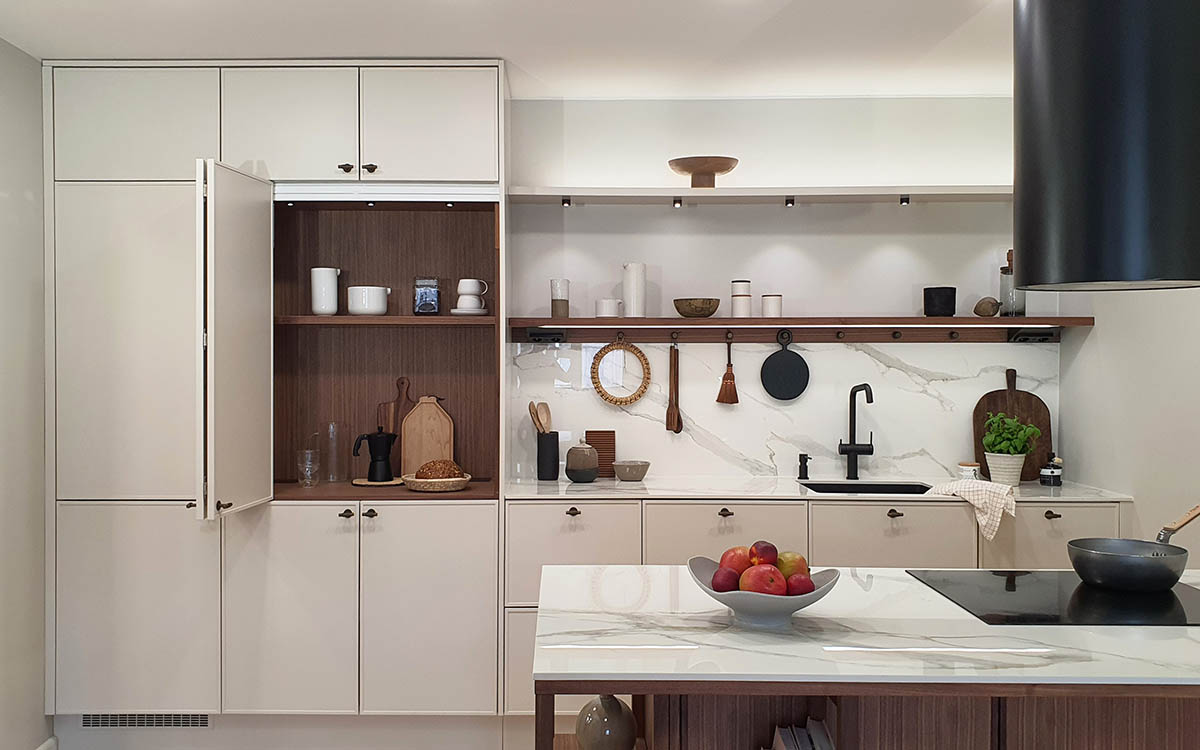
Breakfast cabinets are clearly here to stay. In addition to their trendy appeal, they are a practical solution that makes everyday routines easier while neatly hiding small kitchen items and appliances. What could be more convenient than opening the cabinet doors, making coffee or toast, and then simply closing the doors without needing to tidy up? A breakfast cabinet provides a clean storage solution for small kitchen appliances that are easily accessible when needed.
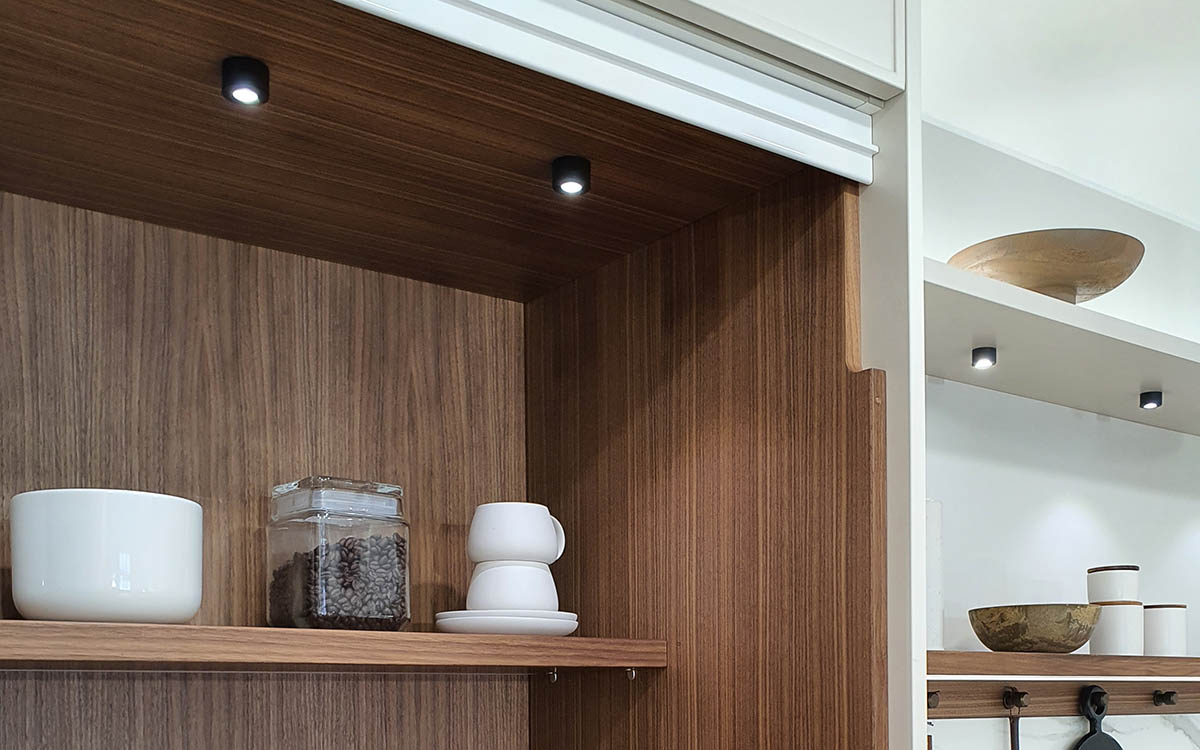
The purpose of a breakfast cabinet is to create a unified and tidy kitchen appearance by keeping appliances and accessories hidden behind doors. However, usability is key to ensuring smooth daily routines. One important factor that significantly improves usability is internal cabinet lighting. Good lighting makes tasks more pleasant and helps keep everything organized. Dishes, coffee, bread, spices, and other items are easier to manage when lighting is sufficient. Lighting can also be integrated into the overall kitchen design and used to highlight items stored in the cabinet.
Choosing lighting for a breakfast cabinet
The lighting should be designed to effectively illuminate the entire cabinet interior and make working inside it easy. A practical solution is a linear profile light that provides even and stylish illumination throughout the cabinet. Profile lights offer several installation options, such as corner or surface mounting. The easiest way is to use ready-made lighting sets, which include all necessary components.
Breakfast cabinet lighting sets always include lighting control. These sets typically feature either a door sensor that automatically turns the lights on when the door is opened, or an IR switch activated by a hand movement. The door sensor switches the lights on when the door opens and off when it closes. The sensor is compact and can be installed discreetly within the cabinet structure.
Easy functionality with automatic lighting control
The simplest way to implement lighting control is by installing a Limente Smart Sensor into the cabinet frame. It can be surface-mounted or recessed and blends seamlessly into the structure. The operating range is 1–5 cm, and it is typically placed in the upper corner of the cabinet.
Lights can also be controlled with a wall switch or wireless switches, in which case they are turned on and off manually.
Power outlets in a breakfast cabinet
For optimal usability, it is recommended to include a sufficient number of power outlets in the cabinet. The number depends on how many devices are used simultaneously. Outlets can be installed horizontally or vertically within the cabinet structure.
Built-in outlets in the countertop are also a practical option, as they can be hidden under a cover when not in use.
Modern kitchens often require charging for smart devices, making USB ports an important addition. A wide range of outlets and USB solutions are available in different colors to match the kitchen design.
A wireless phone charger is the easiest and most seamless way to charge devices. Both recessed and surface-mounted options provide a stylish everyday solution.